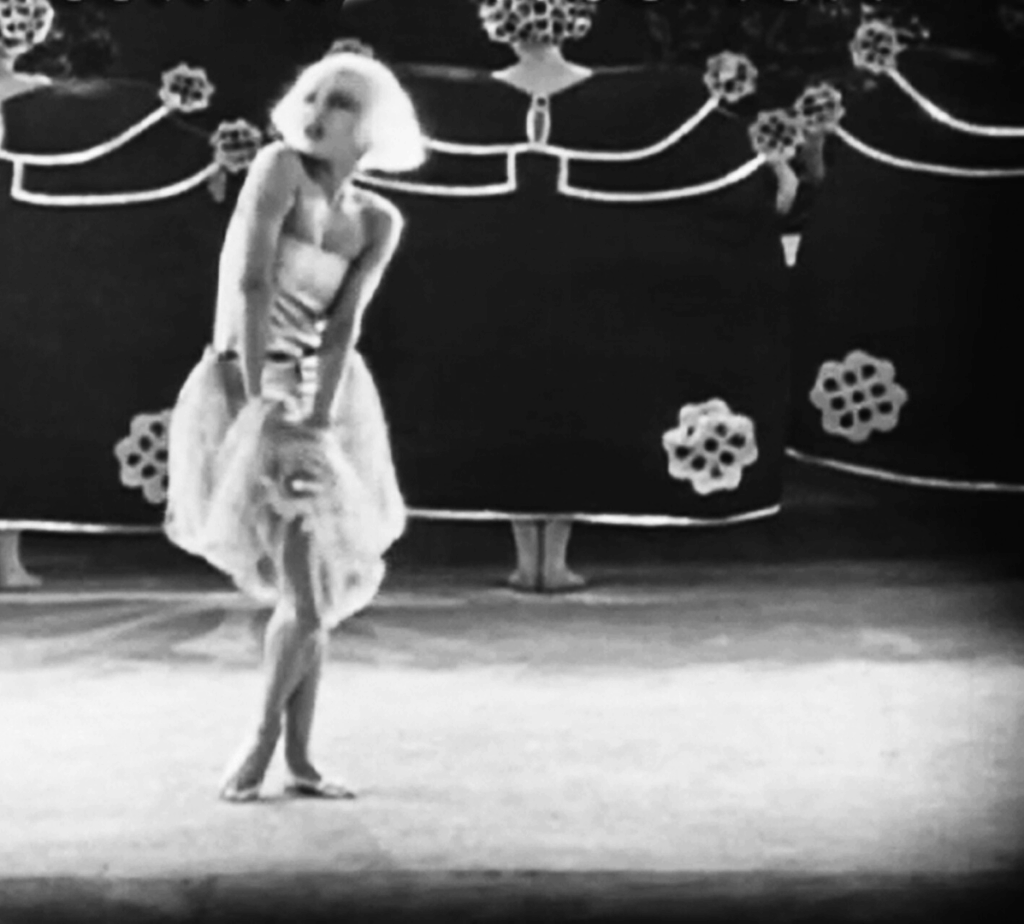
Salomé (2014) by Abigail Child
Friday, April 3, 2026, 7:00 pm
Abigail Child: Foreign Film Series
Abigail Child In Person
Presented in association with Shapeshifters Cinema
Admission: $15 General / $13.50 Cinematheque Members and Members of Shapeshifters Cinema
Event tickets here
Download Program Note
As an artist and writer, Abigail Child has worked seriously across a range of media. In all of them, her principal form has been montage, developing, as Tom Gunning writes, “a system founded not on coherence, but on breakdown, not on continuity, but interruption.” (Colin Beckett)
Abigail Child has been at the forefront of experimental media and writing since the 1980s, having completed more than fifty film/video works and installations and written six books. An acknowledged pioneer in montage, Child addresses the interplay between sound and image, to make, in the words of the LA Weekly: “brilliant exciting work… a vibrant political filmmaking that’s attentive to form.” In her work, Child has restlessly explored different mediums and modes, often working with preexisting footage—drawn from Hollywood films, advertisements, home movies and many other sources—which she radically transforms in ways that unite formal experimentation and social-political analysis. But what unifies her moving-image work above all is the unparalleled dynamism of her investigations into the relationship between sound and image, the still not-fully-tapped possibilities of cinematic montage, the technique of audiovisual fragmentation and the complex mechanisms of language. Child’s films, videos, and installations activate the potential energy of the cinema to an extraordinary degree. In her first San Francisco appearance since 2013, Cinematheque, Gray Area and Shapeshifters Cinema are thrilled to welcome Abigail Child in person to present a two-program sampler retrospective drawn from her rich and complex body of work. (Program note adapted from Anthology Film Archives)
Abigail Child: Foreign Film Series
We perceive that a set of concerns builds up, with artful indirectness: women’s power; the gestures of gender; manipulation of a spectator’s sensibility through the medium of film; large-scale political implications of small moments. Karen Schiff, Big, Red and Shiny)
SCREENING: To and No Fro (2005) by Abigail Child; digital video, b&w, sound, 5 minutes. Mirror World (2006) by Abigail Child; digital video, color, sound, 12 minutes. (If I Can Sing a Song About) Ligatures (2009) by Abigail Child; digital video, b&w, sound, 6 minutes. Salomé (2014) by Abigail Child; digital video, b&w, sound, 20 minutes. vis à vis (2013) by Abigail Child; digital video, b&w, sound, 25 minutes. TRT: 68 minutes.
Abigail Child also appears in person at Gray Area, San Francisco, on Wednesday, April 1 to present Is This What You Were Born For? (1981–1989). Full details here.
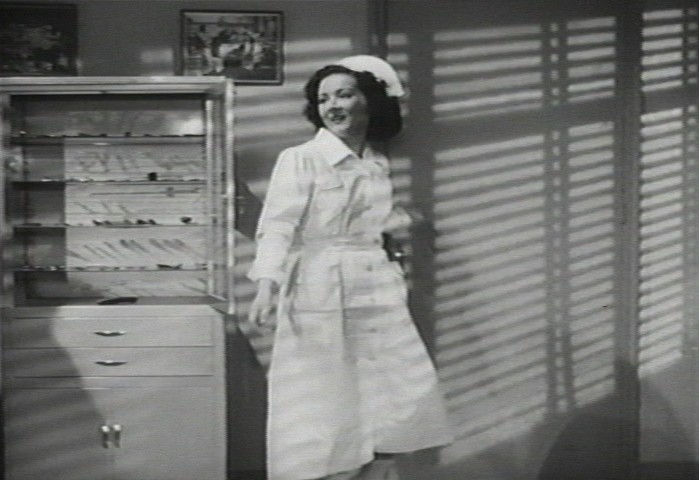
To and No Fro (2005) by Abigail Child
Speculative play with image and sound outside the frame. Status and culture crack the mirror of family secrets, dreams, hauntings and wish-fulfillment in shifting and multiplying frames. In collaboration with Buñuel’s Woman Without Love and Monica de la Torre. (Abigail Child)
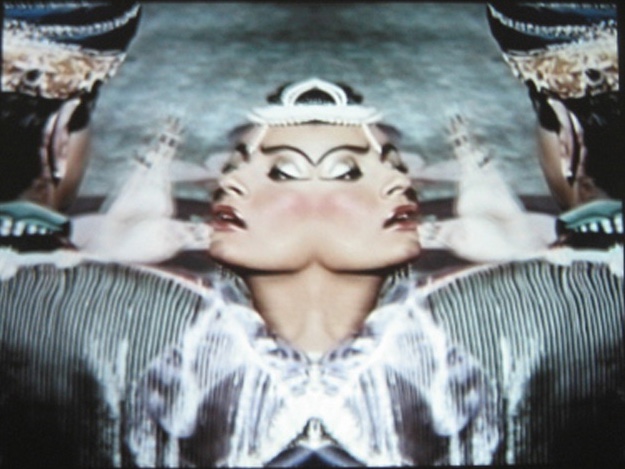
Mirror World (2006) by Abigail Child
In collaboration with Gary Sullivan and Mehboob Khan’s 1952 film Aan. A reshaping of Khan’s classic Bollywood feature, locating its narrative tropes against mistranslated subtitles… becoming “multi-lingual” in the maneuver. Formal play and poetic montage wrench causality to create a sub-version of class conflict and desire. (Abigail Child)
(If I Can Sing a Song About) Ligatures (2009)
To explore relations of text and image, how text turns the image. In (If I Can Sing A Song About) Ligatures, words taken from lines of Nada Gordon’s unrequited love poems, whose vocabulary is taken, in their turn, from anonymous web poems, reveal a history of sexuality. Music by Marty Ehrlich. Images: E.J. Bellocq: Photographs from Storyville (Abigail Child)
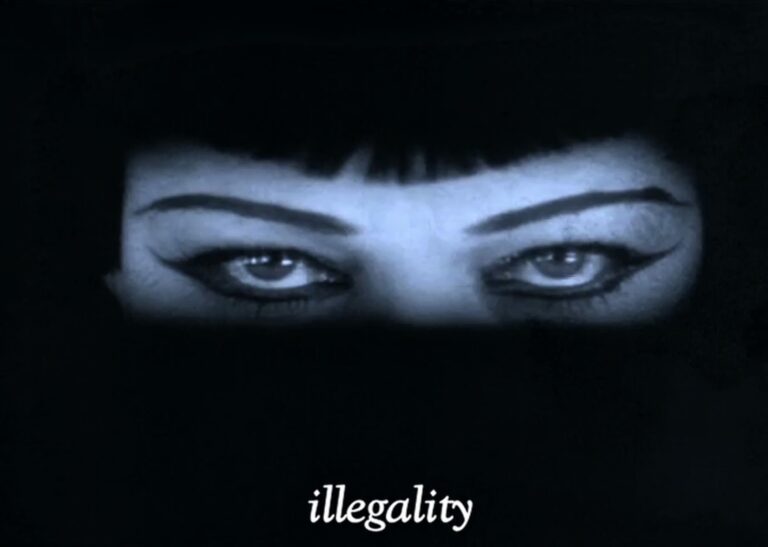
Salomé (2014) by Abigail Child
The classic story of Salomé is imaginatively reconceived as a lost world of mirrors, negatives, hesitations and seductions, culminating in death—the other side of an intense and destructive love. Poet Adeena Karasick’s punning alliteration provides poignancy and irony to Child’s inventive and magical reworking of the 1923 film based on Oscar Wilde’s play. Frank London’s North African-tuned compositions meld with downtown riffs and the eerie sounds of the Theremin to create a haunting and memorable accompaniment. (Abigail Child)
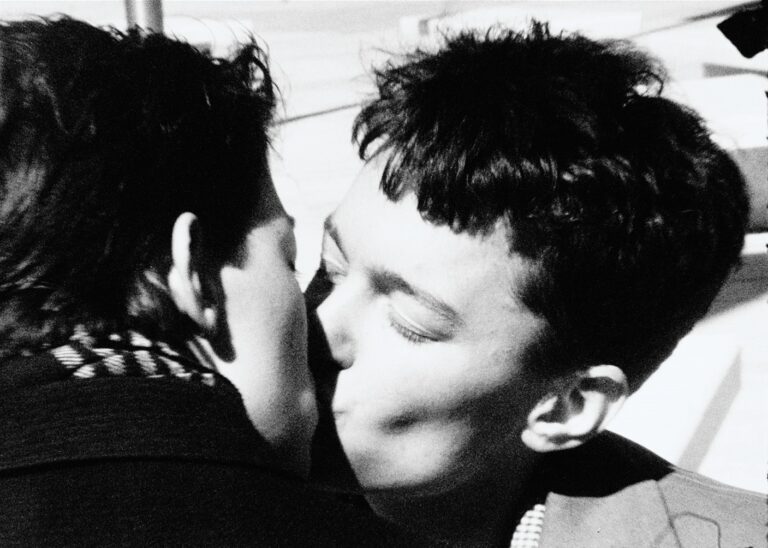
vis à vis (2013) by Abigail Child
Inspired by Vertov’s Lullaby (1937) as well as by Warhol’s Screen Tests and Frampton’s Manual of Arms (1966), vis à vis constructs black and white portraits into a set of Romances, a notebook of sexualities: s/m, lesbian, gay, straight, solo. The piece celebrates friends and divergent (d)alliances. Out of the past comes a vision of the future as a set of erotic possibilities. (Abigail Child)