
She/Va (1973) by Marjorie Keller
Thursday, November 5, 2026, 7:00 pm
Marjorie Keller: Intimate Observer
Presented in association with The Lab
Admission: $15 General / $12 Cinematheque Members
Event tickets here
Marjorie Keller: Intimate Observer
Program curated and introduced by Steve Anker
Marjorie Keller was one of the most significant figures in late 20th century American experimental film. A profoundly original artist, scholar, teacher and advocate, Keller was staunchly feminist without limiting herself to that movement’s ideological orthodoxies. Fiercely independent, her work was sharply critical of the customary role women were relegated to in patriarchal society, even as she embraced aspects of traditional family life. Keller cherished the mostly male history of avant-garde filmmaking, but she was one of the foremost advocates for women film artists throughout her life. When she died at age 43 in 1994, Keller had already produced twenty-seven 8mm and 16mm films. They were remarkable for their thematic and poetical complexity and by investigating her domestic life as a woman for their starting point. Her expressive cinematography and intricate montage were sensual, emotional and intellectually challenging, and while she was clearly influenced by such predecessors as Marie Menken, Stan Brakhage and Saul Levine, Keller’s cinematic voice was distinctly her own from beginning with her first film. (Steve Anker)
NOTE: In conjunction with the publication of a new book on Keller’s work, In the Absence of Marjorie Keller, edited by Robin Blaetz and Scott Hammen, two programs of her films, spanning twenty-four years, will be presented. Each one focuses on Keller’s interest in private life—perceiving daily events as occasions for inquiry and critique. Oct 21: Alternative Visions 7: Marjorie Keller Films @ BAMPFA + Nov 5: Marjorie Keller: Intimate Observer @ The Lab.
SCREENING: Turtle (1972); 8mm screened as digital video, color, silent, 3 minutes; exhibition file from the Film-Makers’ Cooperative. She/Va (1973), 8mm screened as digital video, color, silent, 3 minutes; exhibition file from the Film-Makers’ Cooperative. Misconception (1977); Super-8mm screened as digital video, color, sound, 43 minutes; exhibition file from the Film-Makers’ Cooperative. Ancient Parts/Foreign Parts (1979); 16mm screened as digital video, b&w, silent, 6 minutes; exhibition file from the Film-Makers’ Cooperative. Six Windows (1979), 16mm, color, silent, 7 minutes; print from Anthology Film Archives.
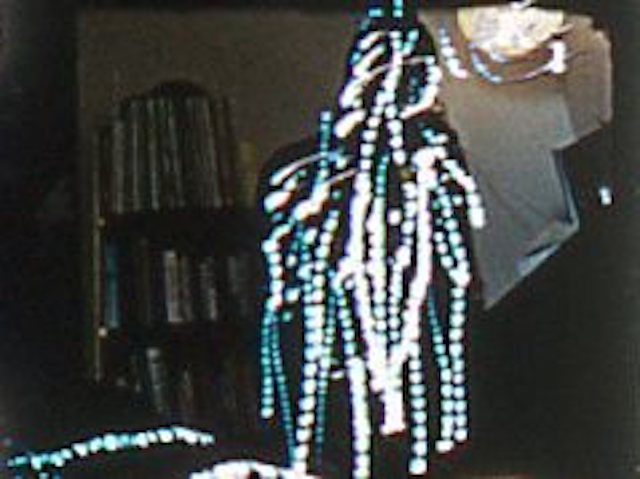
Turtle (1972)
Turtle was Keller’s first film made while she was studying with Saul Levine. It is a brief and ecstatic immersion into the nature of cinema, capturing the essence of beloved objects and a humble student apartment.
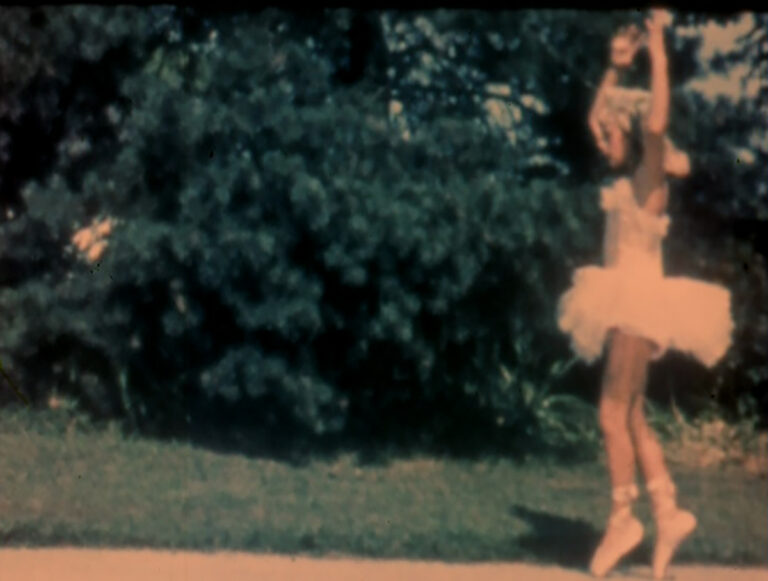
She/Va (1973)
She/Va is an editing tour de force that uses found material to create a parody of teenage wish fulfillment.
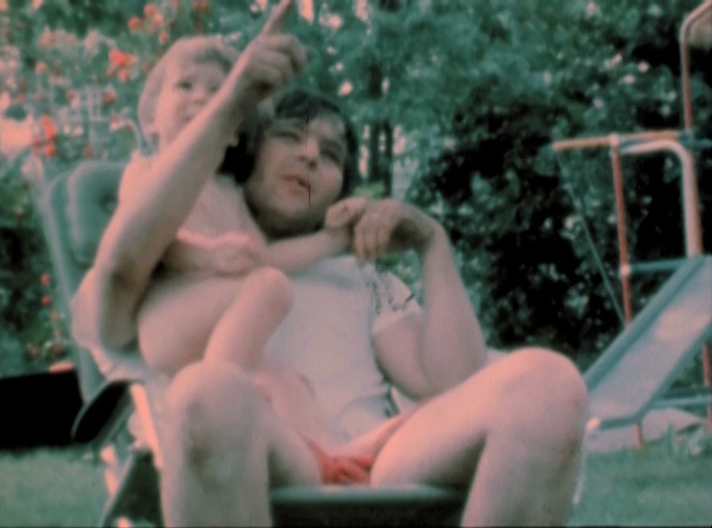
Misconception (1977)
Misconception was Keller’s most controversial and perhaps most emotionally and formally complex film. Startlingly intimate and visceral, the film is an anti-romantic portrayal of childbirth and its aftermath as experienced by her unsuspecting family members. Keller’s masterful weave of low tech Super-8mm sound and images yielded one of the medium’s great treatments of the subject.
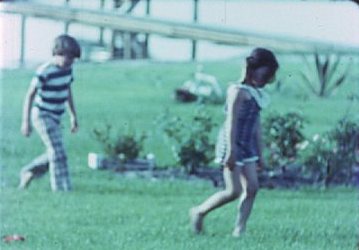
Ancient Parts/Foreign Parts (1979)
Ancient Parts/Foreign Parts are two short films that reflect Keller’s ability to merge home movie spontaneity with critical awareness. The first depicts her nephew toddler in an unexpected revelatory moment while the second offers glimpses of her countryside family life.
Six Windows (1979)
“…I lived in some rooms by the sea and watched the inside and the view as well as the window panes that divided and joined them. I was often lost in thought. The birds would come and make a racket, reminding me I shared that space and sky with them. The film is a moody record of that place and my peace of mind.” (Marjorie Keller)
Marjorie Keller
Writing in Artforum in 1981, Amy Taubin praised Marjorie Keller as “perhaps the only major filmmaker that the American independent film has produced since the end of the Sixties.” At the time of her sudden death in 1994 at age 43, she would leave behind twenty-seven 8mm and 16mm films. Built from small-gauge diary footage, Keller’s films are at once lyrical and anti-romantic, meditations on female experience that render their subjects through radically nonlinear editing and complex experiments in sound-image correspondence. Like Stan Brakhage, one of Keller’s great influences, she transforms her subject matter—a birth, a wedding—from the stuff of home movies to an adventure in perception. Yet she forgoes the self-mythologizing of her predecessor, offering a more earthbound, though no less poetic, take on the subjective nature of memory.
Keller also produced a substantial body of writings, including a scholarly book, The Untutored Eye: Childhood in the Films of Cocteau, Cornell and Brakhage (1986) and at her death was working on a history of women’s experimental cinema that would have charted a trajectory from pioneers like Germaine Dulac, Maya Deren and Carolee Schneemann through to a younger generation represented by Peggy Ahwesh, Su Friedrich and Leslie Thornton, among others.
In addition to her achievements as an artist and critic, Keller played a crucial role in the Collective for Living Cinema, serving on its board of directors and editing the Collective’s publications Idiolects and Motion Picture. Keller also had a major impact on the future of the Filmmakers Cooperative during its key transition in the 1980s. She engaged in the evolving debates around feminism, film and the avant-garde that ran from the ‘70s through the ‘90s, vigorously defending a tradition of highly personal, formally rigorous work that some had rejected as irredeemably masculinist, while at the same time subjecting that tradition to a nuanced critique through her own scholarship and filmmaking. Though highly skeptical of the ways in which feminist film studies had, ironically, come to ignore some of the considerable accomplishments by women in the American avant-garde, Keller was nevertheless one of the key figures of her era to synthesize theory and practice at the most advanced level. (Light Industry, 2013)
Steve Anker
Steve Anker, Dean of CalArts’ School of Film/Video from Fall 2002 through Spring 2014, began the film and video screenings as Program Director for the Boston Film/Video Foundation (1977–1980), was Artistic Director of the San Francisco Cinematheque (1982–2002), and began and co-curated Film at REDCAT (Los Angeles) from 2003 until his retirement in 2020. Anker has curated film series and programs of experimental film for The Museum of Modern Art, Pacific Film Archive, UCLA Film and Television Archive, London International Film Festival, Austrian Cultural Ministry, Los Angeles County Museum of Art, San Francisco Museum of Modern Art, Sharjah Art Biennial and Ann Arbor Film Festival. Anker has published essays on Martin Arnold, Bruce Baillie, Stan Brakhage, Valie Export, Larry Gottheim, Gunvor Nelson and Marjorie Keller. He taught at Massachusetts College of Art, San Francisco Art Institute, Bard College, San Francisco State University and CalArts.
RELATED BOOK: In the Absence of Marjorie Keller Edited by Robin Blaetz and Scott Hammen, this new collection brings together contemporary critical essays on Keller’s films and organizational work alongside selections of her own scholarly and creative writing, offering renewed attention to her contributions to experimental cinema. Pre-0rder now!